

Specification Project Reviews
The EDP defines a number of life cycle reviews for Eclipse projects. All projects start with a creation review, but the most common type is the release review. In addition to those reviews defined by the EDP, the EFSP further defines plan reviews.
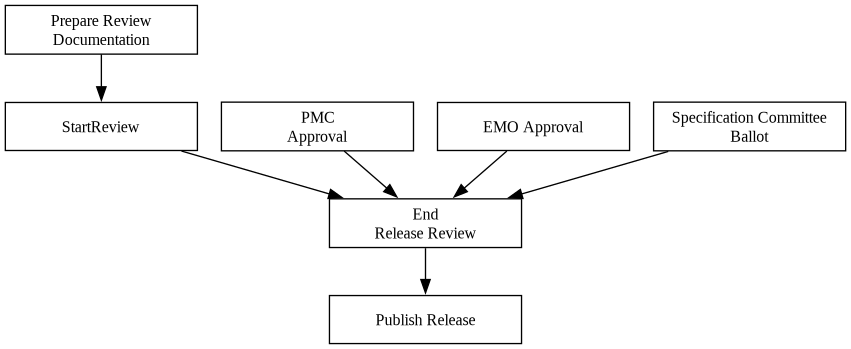
Specification project teams engage in reviews in the same manner as all Eclipse projects, with a few differences:
- Prior to starting the release cycle, a specification team must engage in a successful plan review;
- Specification project teams must engage in a release review prior to every release (including service releases);
- Following a successful plan review, the project team must engage in either a release review or a progress review within one year; and
- All creation, plan, release, and progress reviews require supermajority approval from the corresponding working group’s specification committee.
Note: Individual working groups may have additional requirements for some life cycle events, and guidance for engaging in working group-specific processes. Those additional requirements will be captured and disseminated by the working group.
Supermajority approval of a particular review is obtained via a ballot that is initiated and tallied by the specification committee (typically by the specification committee chair or their designate).
The process described in the Progress Reviews (which are the same as release reviews) section is the same for specification projects.
Tip: In the lead up to a review, it is in the best interests of a specification project team to engage with the specification committee in their designated community/public channel to socialise plans and expectations. You must get supermajority approval from the specification committee before you can make an official release of your specification, so giving them every opportunity to understand and provide feedback on what they’ll be voting on is in your best interests. Besides, operating in an open and transparent manner is a critical success criteria for all open source projects.