

Releases
Releases are formal for Eclipse projects.
Releases are broadly categorised as:
- Major releases include API changes (potential for downstream breakage);
- Minor releases add new functionality, but are API compatible with previous versions; and
- Service releases include bug fixes only and include no significant new functionality.
Eclipse projects are expected to engage in an iterative release process.
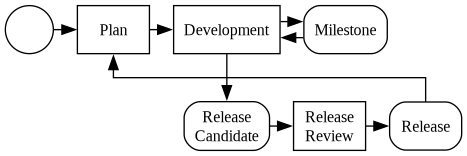
Every release cycle starts with a plan that is created in an open and transparent manner and made available the community both for review and to solicit input. The development process must be iterative, with the regular delivery of milestone builds to solicit feedback. The release cycle ends with the delivery of a final release candidate, and general availability of the products of the release.
Warning: Specification projects must engage in a release review for every major or minor release.
Only project teams that are in good standing can produce official major or minor releases. A project is considered to be in good standing when they have engaged in a progress review within the last year. Put another way, a project team may declare official major or minor releases and distribute associated products for up to one year following a successful progress review. Reviews are not required for service releases that are based on an official major or minor release.
Warning: Intellectual property must be properly accounted for and tracked at all times. The project team must engage in the Eclipse IP Due Diligence Process on an ongoing basis. The IP review and approval that occurs at the time of a progress review should be regarded as a means of confirming that intellectual property is being properly managed and not as a trigger to engage in a last minute clean up.